-
×
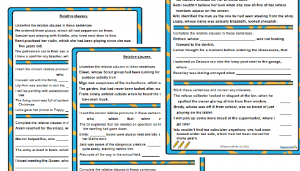 Years 5 and 6 Relative Clauses Bundle
1 × £2.50
Years 5 and 6 Relative Clauses Bundle
1 × £2.50



Ideal for use in Upper KS2 when this objective is first introduced.
- ‘Modal verbs’ activity sheets with three levels of differentiation, includes a range of activities for children to identify how modal verbs are used within sentences.
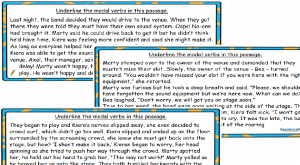
- ‘Modal verbs’ passages, short paragraphs with three levels of differentiation children to identify the modal verbs used within sentences.
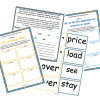
- ‘Modal verbs’ display cards for your class display.
What’s included:
- Differentiated activity sheets at three levels — identifying modal verb usage within sentences
- Differentiated reading passages at three levels — locating modal verbs within short paragraphs
- Display cards for classroom or working wall use
All files provided as PDFs ready to print and go.
Differentiation
Three levels are included to support all learners:

Modal verbs: should, would, will, may, can, could, might, must and shall.

Modal verbs: includes the above and wouldn’t, shouldn’t, won’t, can’t and mustn’t, in single and some multi-clause sentences.

Modal verbs: includes the above and ought to, in multi-clause sentences. Classifying the modal verbs into
positive and negative as well as by certainty and possibility.
National Curriculum Links
This resource directly addresses the statutory Year 5 National Curriculum grammar requirement – Indicating degrees of possibility using modal verbs [for example, might, should, will, must]
Years 5 and 6 – Pupils should be taught to develop their understanding of the concepts set out in English Appendix 2 by using modal verbs to indicate degrees of possibility.
How to use
Works well as an independent activity, guided group work, or as part of a grammar carousel. Start with the display cards to introduce the modal verbs before pupils move to the activity sheets. The reading passages work well as a follow-up consolidation task or for early finishers.